


Our Technology
A New Standard
for Cataract Surgery
Every year, millions of patients still rely on glasses after cataract surgery — but Omega is poised to change that.
Background on Cataract Surgery
Cataract surgery is the single most common surgical procedure performed in the United States annually. As a result, the intraocular lens implant (IOL) is the most commonly implanted medical device every year, with more IOLs implanted annually than artificial hips, knees, coronary stents, ear tubes, pacemakers and breast implants combined . Despite technological advancements in both surgical instrumentation and intraocular lens design, approximately 50% of this huge patient population is still unable to see well without corrective lenses (glasses or contact lenses) after surgery.
Omega’s new, proprietary lens will dramatically increase the number of satisfied cataract surgery patients by reducing the variables during surgery, thereby revolutionizing an industry that has not seen positive, disruptive change in decades. With a global intraocular lens market projected to reach $12.4 billion in 2033, the Gemini Refractive Capsule is well-positioned to become the new standard lens for cataract surgery.
4 Million
Yearly cataract procedures performed in the U.S. alone
50%
Of patients still need corrective lenses after surgery
$12 Billion
Global IOL market is projected to reach $12.47 billion by 2033
Cataract Surgical Technology
Over the past 20 years, there have been some positive, incremental procedural advancements that have allowed the typical cataract surgery to now become a relatively quick, outpatient procedure. There have also been incremental advancements in lens technology that have helped assure more positive outcomes.
Unfortunately, each new procedure or device has only provided marginal improvements over previous generations. Sadly, even with all of the advanced technology available, the outcomes of the most skilled surgeons do not always reflect their investments in technology, their accuracy in measurements, or their expertise during surgery.
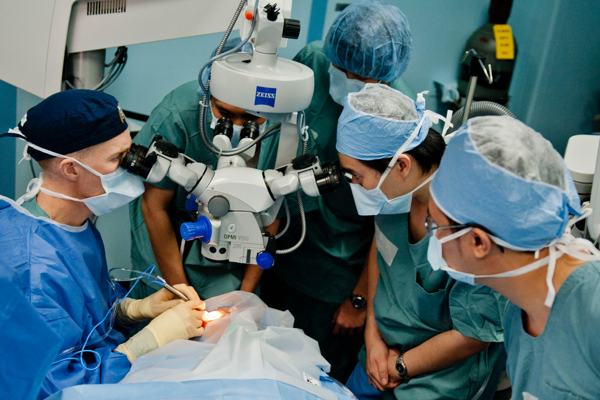
Candidly, the current technology and procedures have reached the point of diminishing marginal returns by continuing to use outdated intraocular lens designs. The Gemini Refractive CapsuleTM has the unparalleled potential to revolutionize an entire industry, providing a generational paradigm shift not seen in ophthalmic surgery for the past sixty years.
Current State of the Art
Cataract surgery in the U.S. is commonly performed using a combination of scalpels and/or lasers to make incisions, ultrasound to emulsify the cataract, and vacuum aspiration to remove the emulsified debris. At the end of the procedure, a new intraocular lens is placed inside the empty lens capsule that once held the cataract inside the eye. This lens may incorporate technology to correct for near-sightedness, far-sightedness and/or astigmatism. Standard intraocular lenses are fully covered by insurance, while premium intraocular lenses that correct for presbyopia and/or astigmatism are paid for as an out of pocket expense. The specific lens implanted will typically be the one chosen by the surgeon based on medical conditions of the patient plus basic measurements taken prior to surgery.
Currently, all cataract procedures have an “Achilles Heel” that has never been adequately addressed: the cataract is 5mm thick and the lens implant is only 1mm thick, so for every millimeter the lens ends up outside of its predicted position, the average patient will experience 1.5 diopters of image distortion. This unpredictable guesswork has resulted in the average ophthalmologist failing to provide a patient with good vision without glasses about 50% of the time.
A New Category of Lens
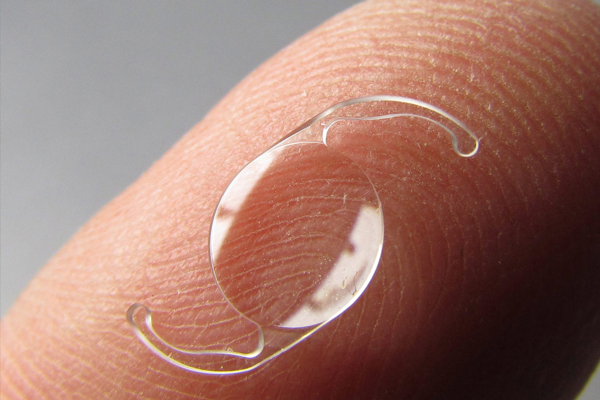
The standard IOL used in cataract surgery is composed of a central round refractive lens, with haptics designed to keep the lens in position within the eye. All of the current IOL lenses are plagued with variables in their predictive effect, variables that are almost impossible to control with existing technology. There are also significant problems with accurately predicting the variances that often occur after surgery. Additionally, removing a prosthetic lens once it has been implanted becomes problematic due to post-operative capsular fibrosis and opacification.
Currently, surgeons must make a potentially life-altering decision for their patients’ vision with imperfect information before surgery, inadequate options during surgery, and limited options for correcting the problem after surgery. The Gemini Refractive CapsulTM is specifically designed as a predictive model to reduce variables and improve outcomes. Significantly, this new technology is so advantageous, all future intraocular lens implants will likely need to be designed to work with our refractive capsule in order to remain competitive. Therefore, the goal is to become the new standard of care for the next generation of intraocular lens implant devices and procedures.
The Gemini Refractive Capsule is designed to neutralize the single most important variable with regard to predictable visual results: Effective Lens Position (ELP). Instead of using two-dimensional arms to hold the lens centrally within the X/Y plane of the eye, the Gemini Refractive Capsule utilizes a revolutionary design to also control the Z plane in a three-dimensional way. The design borrows from current lens designs only with regard to the advanced optics and biocompatible materials so that the pathway to approval is minimized.
By finally having control of the X, Y and Z planes within the eye, surgeons at last will have three-dimensional control of the lens plane, resulting in exponential improvement in outcome for their patients while significantly reducing the need for costly glasses or contact lenses to correct eyesight after surgery. While the initial goal of this new refractive capsule was simply to solve the problem of refractive results after cataract surgery, it became clear early on that a “function follows form” approach to a new lens design would yield many downstream advantages as well.